
Guides & inspiration for screens that perform
Practical examples, best practices, and ideas to help you create content that drives attention, action, and revenue — on real screens, in real spaces.
What works on real screens.
Screens don't live in design tools.
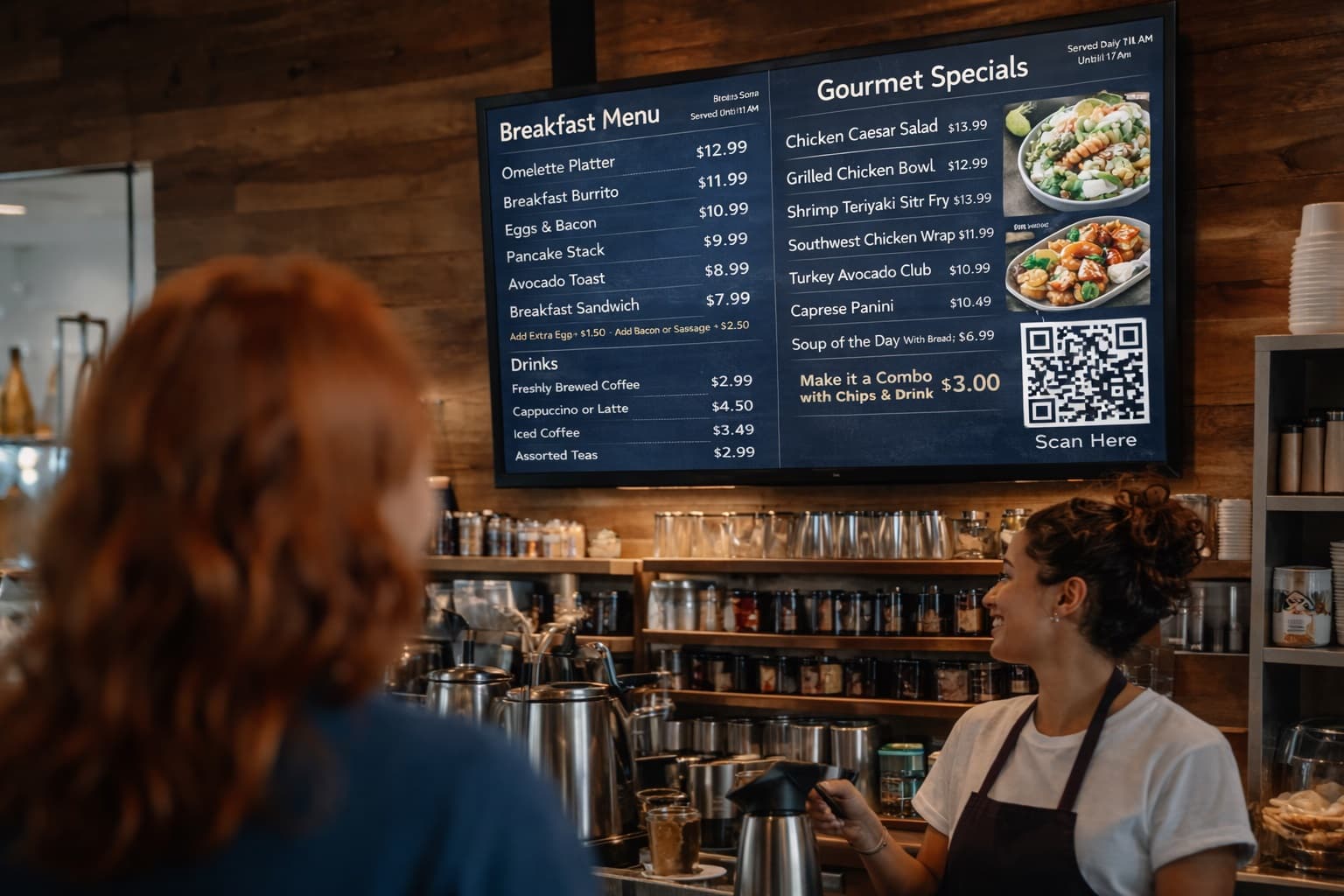
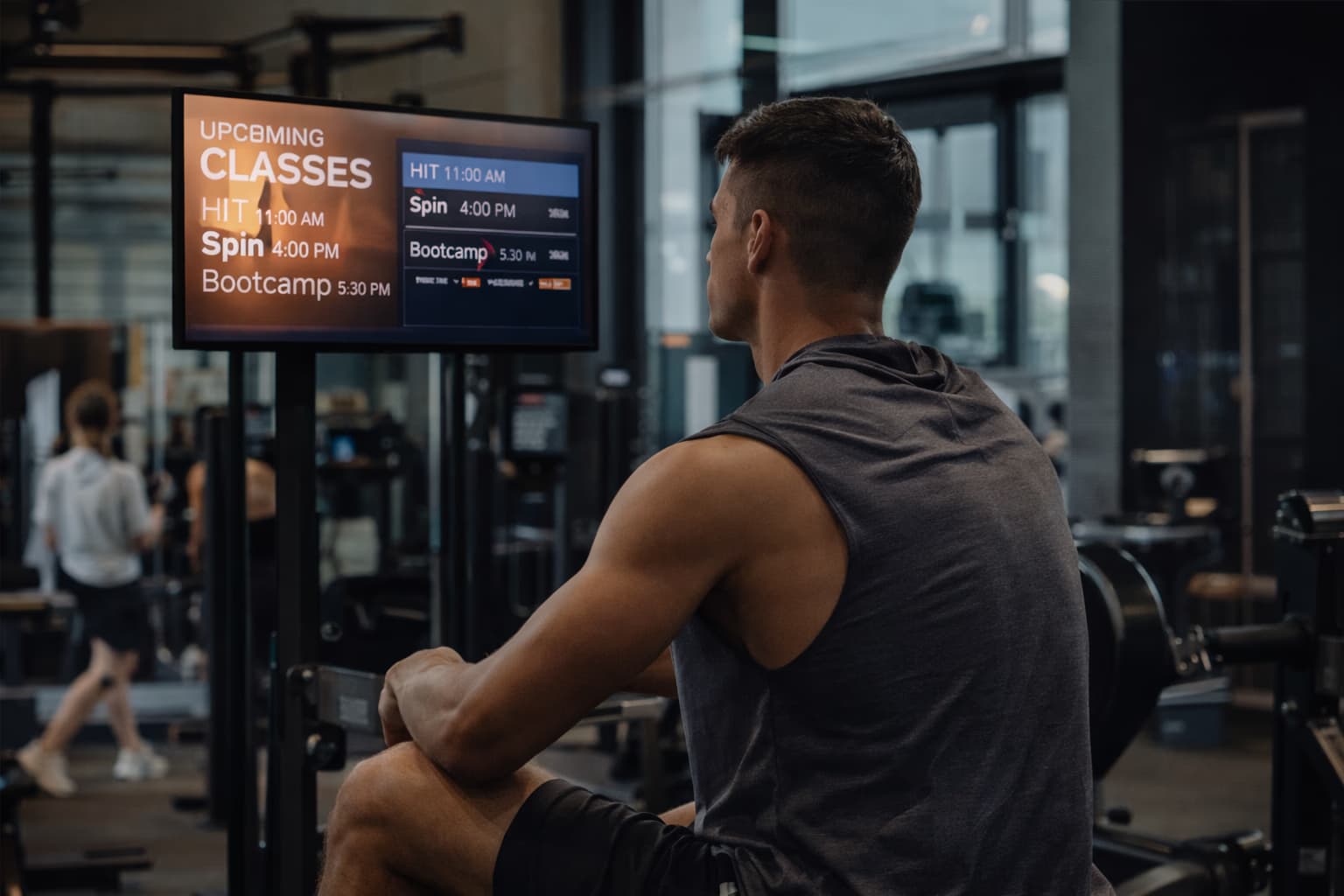
They live in noisy cafés, busy salons, retail floors, gyms, and offices.
People don't stop to admire them. They glance at them — often while doing something else.
What works isn't about looking "cool". It's about being noticed, understood, and remembered in seconds.
Everything below is built from real-world use, real constraints, and real results — not theory.
Designed for real spaces. Built for real results.
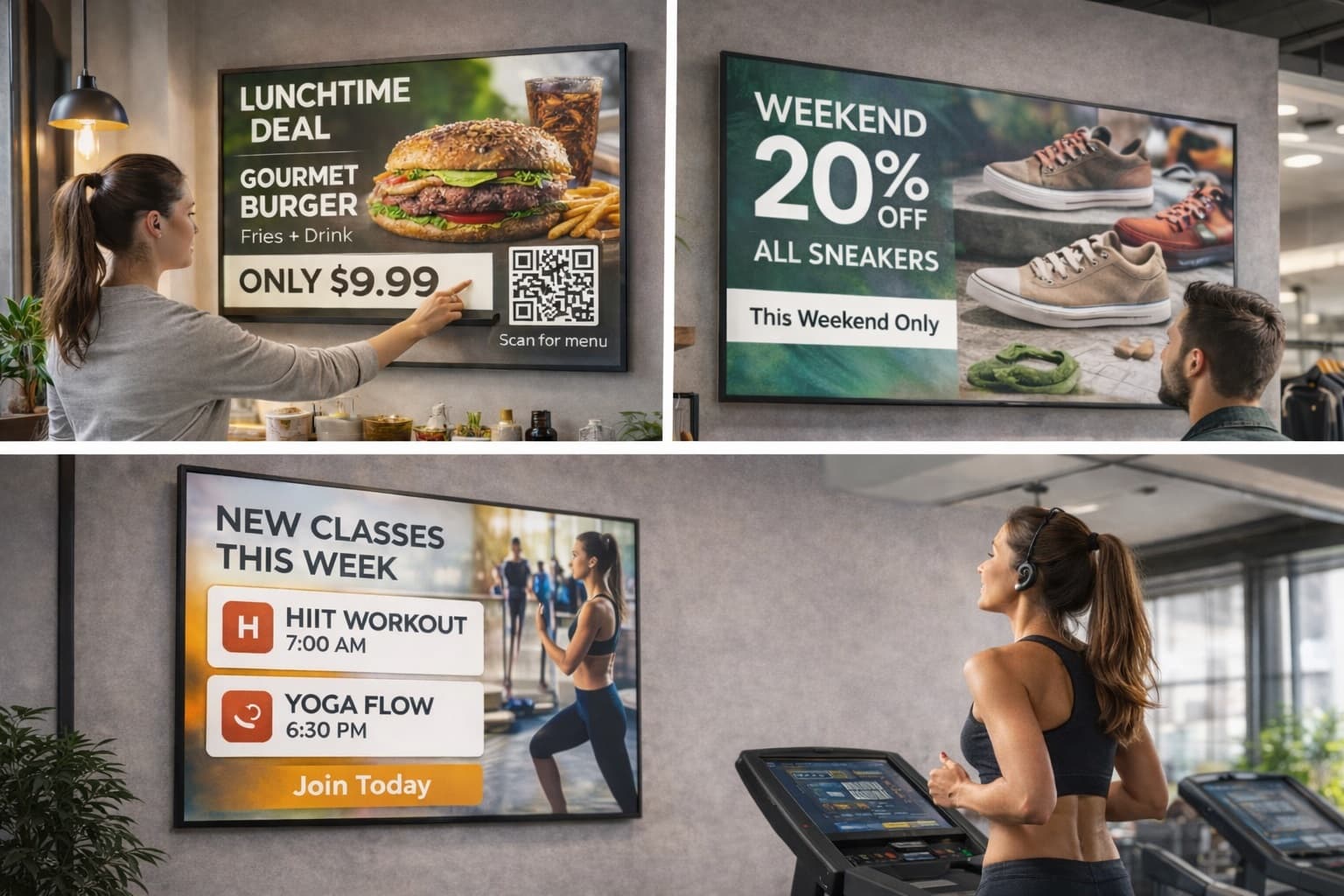
Screens that perform aren't accidental. They're designed for the space they live in — and the people moving through it.
This is the thinking behind DisplAI — and how we help businesses turn screens into tools, not decoration.
People don't read screens — they scan them. Often for less than two seconds. What works is clarity: One clear message at a time Strong visual hierarchy High contrast between text and background Movement helps, but only when it's purposeful. Too much animation creates noise — not attention. What doesn't work: Too much text Static layouts that never change Messages competing with the physical space The goal isn't decoration. It's capturing attention fast enough for the message to land.
Static screens fade into the background — fast. When content never changes: Customers stop noticing it Staff stop trusting it Promotions lose urgency Dynamic content works because it creates expectation: What's new today? What's relevant right now? Why should I look again? If your screen looks the same today as it did last month, it's probably invisible.
More often than you think — but not randomly. The right rhythm depends on context: Daily or weekly updates for promotions Time-based changes for menus, classes, or offers Seasonal shifts to keep content feeling fresh The goal isn't constant change. It's predictable freshness. When screens update regularly, people start paying attention again — because they learn that looking is worth it.
Orientation isn't a design preference. It's a context decision. Portrait works best when: People are close to the screen Content is read vertically (lists, menus, schedules) Space is narrow or high-traffic Landscape works best when: People view screens from a distance Content is more visual Messages need breathing room Choosing the wrong orientation makes even good content harder to understand.
Screens don't sell by themselves. They support decisions. The most effective screens: Reduce friction ("What should I choose?") Highlight priority items or offers Reinforce decisions at the right moment When screens are clear, current, and contextual, they don't feel like ads — they feel helpful. That's when they start driving real results.
What we've learned from real screens
After years of working with digital signage in real environments — cafés, retail floors, gyms, salons, and offices — a few patterns show up every time.
They're simple. But they matter.
Screens are looked at, not studied
People don't stop to analyze screens. They glance at them while ordering, walking, waiting, or moving.
The best-performing screens communicate one clear message — fast.
Less content almost always performs better
More content rarely means more value.
Fewer elements, stronger hierarchy, and generous spacing consistently outperform crowded layouts.
Context beats creativity
What works depends on where the screen lives.
A busy café, a quiet office, and a gym floor require very different content.
Design that respects the environment always wins over design that tries to impress.
Freshness builds trust
Screens that change feel alive.
Screens that don't fade into the background.
Regular updates signal relevance, credibility, and attention to detail.
We don't just provide the platform — we help you use it well
DisplAI is built on practical experience, not theory.
And when needed, we're happy to help.
Whether it's structuring content, choosing formats, or deciding what actually belongs on your screens, we work closely with our customers to make sure their screens perform — not just look good
Because great digital signage isn't about design alone.
It's about results in the real world.